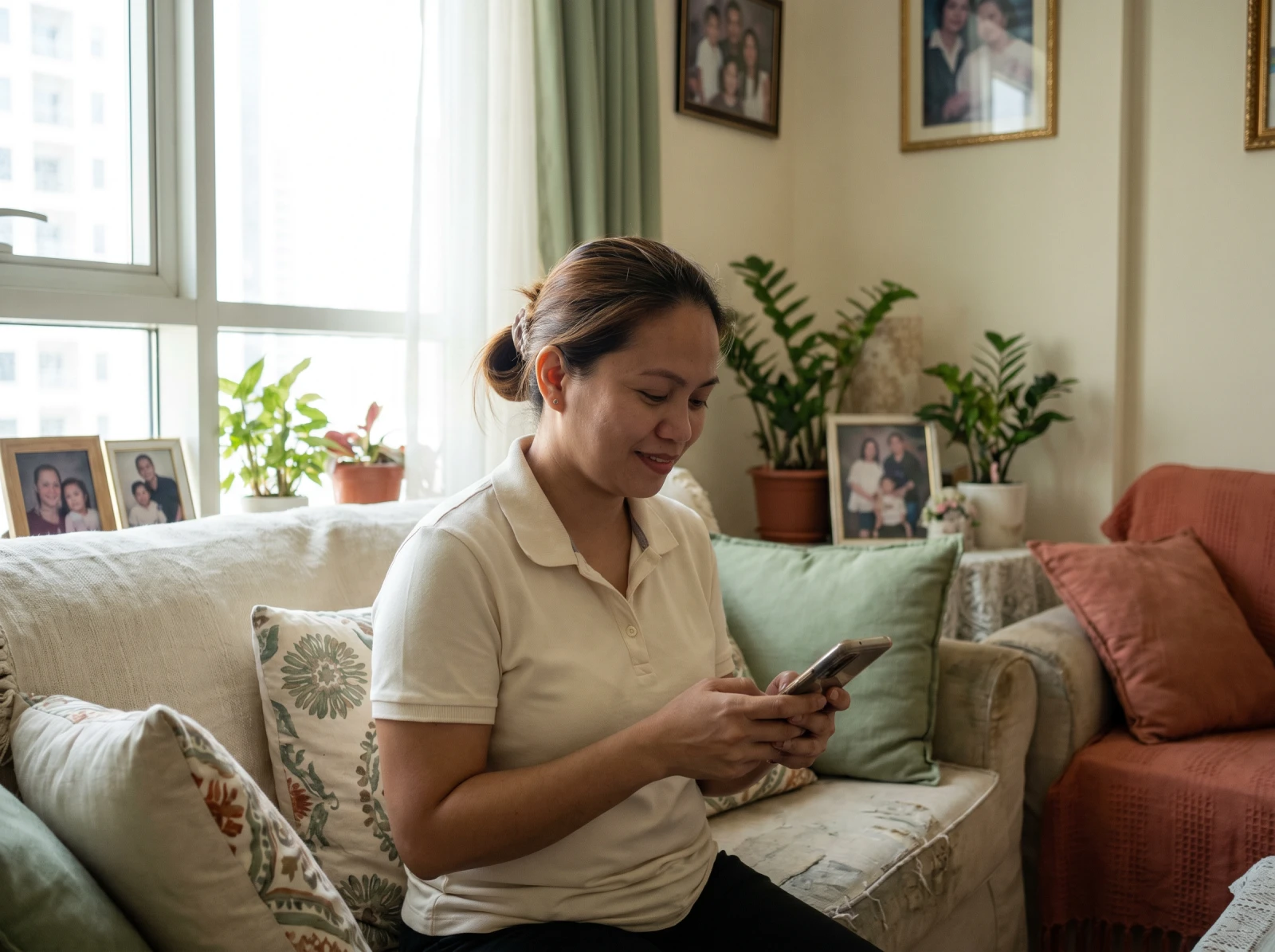
You trust her with your child. Do you know what she knows?

The Child Caregiver Knowledge Assessment (CCKA™) is an independent, area-by-area measure of practical childcare knowledge, scored to a documented standard rather than by the agency or the family, with the specific gaps named.

  • AED 149 · per caregiver
  • Untimed
  • Online

final price & VAT confirmed at checkout · English now, Arabic in progress

Certifying yourself? You’re in the right place Have a seat code? Redeem it
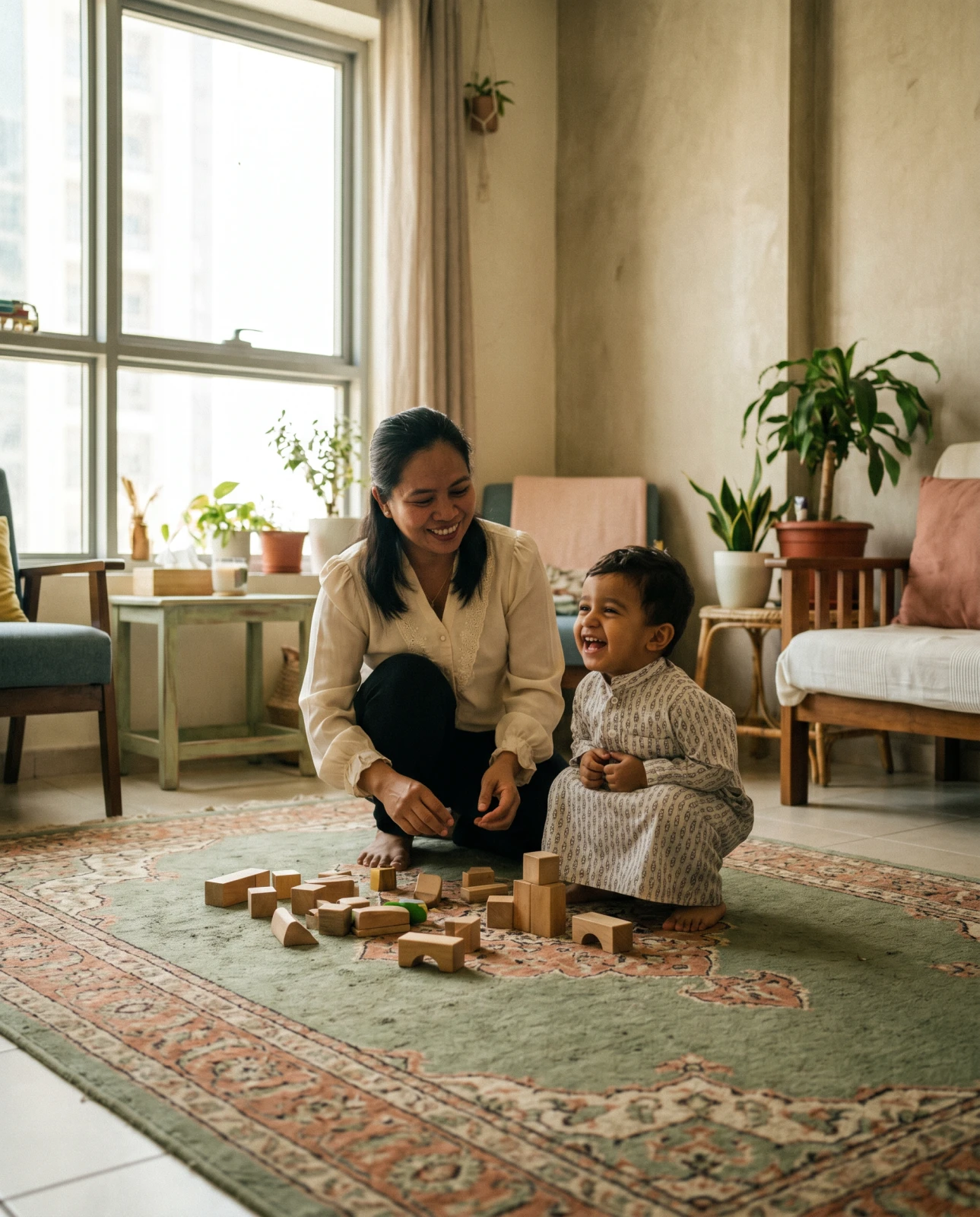
A caregiver and a toddler stacking wooden blocks together on a sunlit rug

The result is a map, not a verdict.

A pass-or-fail tells you almost nothing. This assessment scores seven areas of practical childcare knowledge separately, so the report shows exactly where a caregiver is strong and where there is a gap. Tap an area to see the kind of question it asks.

Illustrative, not a real person

Knowledge by area

  • A toddler is choking but can still cough loudly. What do you do first?

    Encourage coughing and stay close. While the airway is partially clear, the child’s own cough is more effective than intervention. You watch, ready to act if the cough goes silent.

    Sample item · format and register only, not from the live assessment, never stored.

  • You have just changed a nappy and lunch is next. What comes first?

    Wash your hands with soap and water before touching any food. Gel sanitiser is a backup, not a substitute, after a nappy change. Clean hands are the single habit that stops most bugs from travelling to the kitchen.

    Sample item · format and register only, not from the live assessment, never stored.

  • From what age can a child safely eat honey?

    12 months. Before 12 months, honey carries a risk of infant botulism, even a taste.

    Sample item · format and register only, not from the live assessment, never stored.

  • How should a baby be put down to sleep?

    On their back, in a clear cot. Back-sleeping in a bare cot is the single biggest protection against SIDS, at every nap, not just at night.

    Sample item · format and register only, not from the live assessment, never stored.

  • A child is having a febrile seizure. What do you do?

    Clear the area, turn them on their side, and time it. Never restrain a child or put anything in their mouth. Protect the space, position them safely, and time the seizure for the doctor.

    Sample item · format and register only, not from the live assessment, never stored.

  • A two-year-old plays next to another child but never with them. Is something wrong?

    No, that is normal at this age. Playing alongside, called parallel play, is how two-year-olds play. Playing together comes later, and pushing it early helps no one.

    Sample item · format and register only, not from the live assessment, never stored.

  • A child has a small bump during the day but seems completely fine by pick-up. What do you do?

    Tell the parents what happened, plainly, at handover. Honest updates, even small ones, are what keep trust. A parent should never hear about a bump from the child first.

    Sample item · format and register only, not from the live assessment, never stored.

The report would read: strong on safety, supervision, and parent communication; the area worth working on is recognising illness and common emergencies.

Scores above are illustrative, to show the shape of a report; the final list of areas is being confirmed with our psychometrics lead before launch. Where a gap is named, the optional course is one calm way to close it, never a requirement.

What the person being assessed experiences.

Respect is part of the method. A caregiver who is treated fairly gives you a result you can actually trust.

  1. A caregiver reading a consent sheet with an agency coordinator Invited with consent, in clear language
  2. A caregiver taking the assessment on a laptop at a kitchen table Takes it online, at their own pace
  3. A caregiver reading her result on her phone with a quiet smile Sees their own result and what it means
  4. A caregiver holding her printed certificate Carries the certificate to any employer

The report, before you pay for it.

One page of the actual deliverable, annotated so you can read it in five seconds. Nothing important sits behind the payment.

CCKA™ Report · Specimen

Overall band: Proficient

  • Safety and supervision
  • Feeding and nutrition by age
  • Illness and common emergencies
  • Communication with parents

Next step: a short refresher on illness and emergencies. The matching course module is optional, never required.

Specimen · illustrative, not a real person
  1. One overall band, not a pass or fail
  2. A strength or a gap, named per area
  3. What to do next, in plain language

Open the full sample report

Best together: what they know + how they respond.

See the bundle

Questions, answered plainly.

What does it actually measure?

Practical childcare knowledge, across the situations a caregiver meets in a real home: safety and supervision, hygiene, feeding by age, daily routines, recognising illness and common emergencies, play and early development, and communication with parents. Each area is scored on its own, so the report separates where a caregiver is strong from where there is a gap.

Who scores it, and against what standard?

It is scored to a documented, consistent rubric, independently of the family or agency who bought it. The same standard applies to everyone, so the result is one all sides can read the same way. No buyer can adjust a score.

Is the result private?

Yes. Results are handled in line with the UAE Personal Data Protection Law (PDPL). A caregiver consents before they begin; the report is shared only with the person or agency who arranged the assessment, and the caregiver receives their own copy and certificate. Some processing happens outside the UAE, which we set out in full in our privacy notice.

Is this a pass-or-fail, or a guarantee a caregiver is good?

Neither. It is a measured, area-by-area read, not a single verdict. A low score in one area is a specific, useful signal, the part worth a conversation or a short refresher, not a judgement on the person.

Can a caregiver just look up the answers or game it?

It is scored to a consistent rubric independently of the buyer, and the same instrument applies to everyone, so a result reads the same way for all sides. For agencies, each caregiver is invited with a single-use code, so seats cannot be casually shared or replayed.

How do agencies buy in bulk?

You buy seats by card or invoice, invite each caregiver from your portal with a single-use code, and read every result in one place. See pricing.

More questions, including fairness, timing, and languages, are answered on the FAQ page.

Know what she knows, before you rely on it.

AED 149 per caregiver · final price & VAT confirmed at checkout

Buy this assessment

This shows what they know. Pair it with how they respond.

An assessment informs a decision; it does not guarantee a caregiver’s suitability or safety, and it is not a clinical diagnosis.